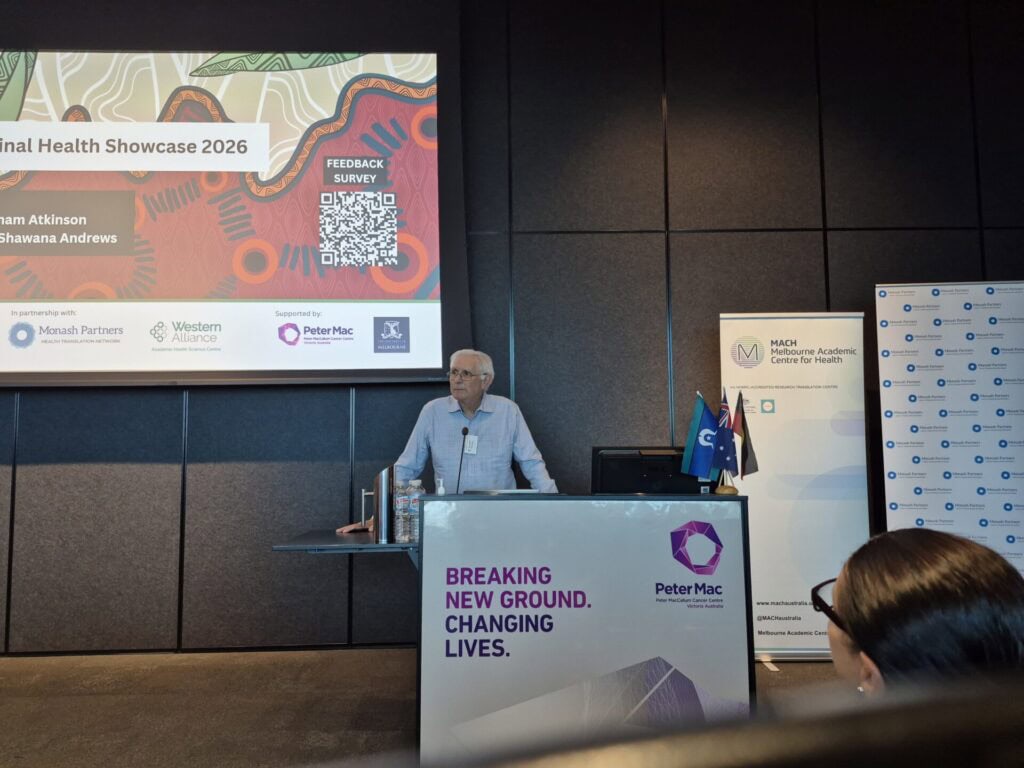

Following last year’s inaugural MACH Aboriginal Health Showcase, this year’s event was expanded in partnership with Monash Partners Health Translation Network and Western Alliance Academic Health Science Centre.
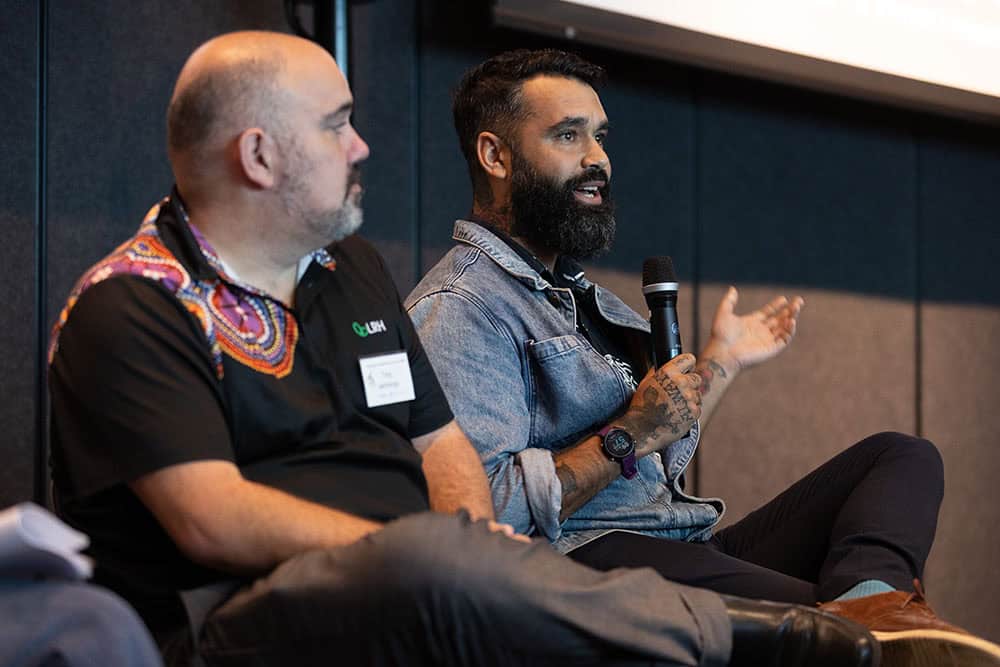
Held on 23–24 March 2026 at the Peter MacCallum Cancer Centre (Peter Mac), the Showcase, co-hosted by Uncle Graham Atkinson and Professor Shawana Andrews from the MACH Aboriginal Leadership Group, brought together more than 600 members of the Aboriginal health research community and allies from across health services, universities, research institutes and broader community.
Presentations focused on the theme of Healthy Koorie Communities – demonstrating how culturally safe, community-led research is strengthening care across metropolitan, regional and community settings.
Aligned with the UN International Day for the Right to Truth, the Showcase created space for connection, reflection and shared learning – including a dedicated second day for Aboriginal and Torres Strait Islander participants.
Cultural safety was positioned not as an “add-on” but as core business.
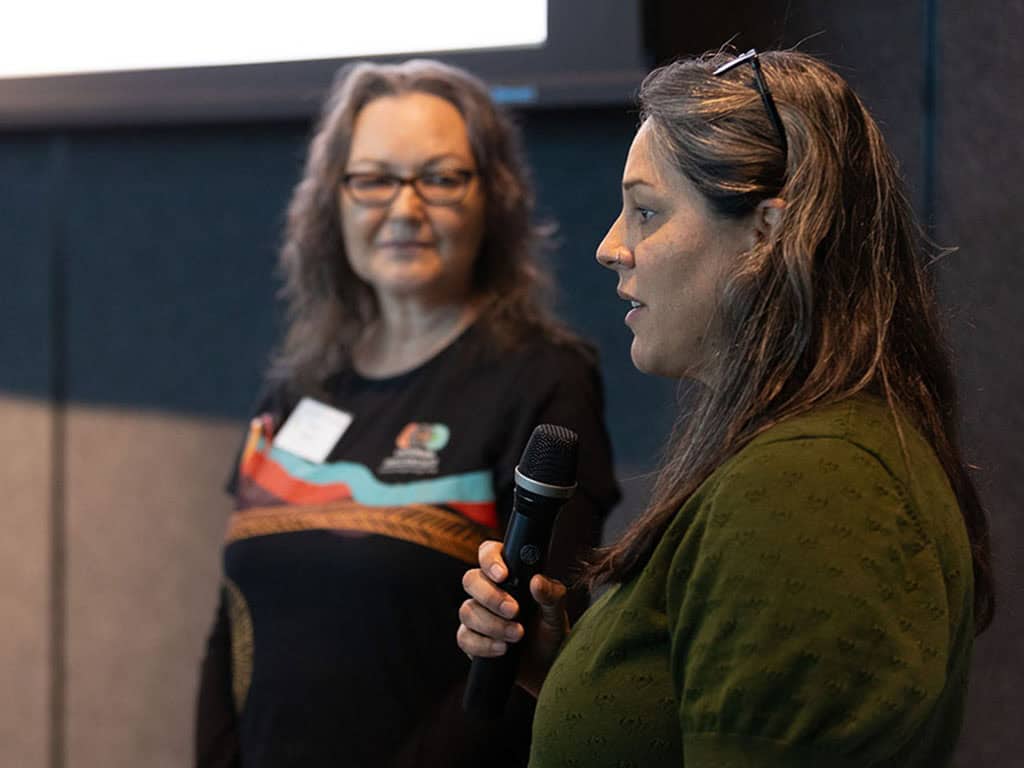
Co-host Professor Shawana Andrews, Associate Dean Indigenous Development at the University of Melbourne, highlighted the importance of truth-telling.
“We’re incredibly proud of the researchers addressing the issues that Aboriginal and Torres Strait Islander communities care about in their research,” Professor Andrews said.
“There was a real sense this collective work will have a real impact on Aboriginal and Torres Strait Islander communities – to improve their experiences of the health system, their ability to access services and, ultimately, to receive the care they need.”
Working with Indigenous communities: pause before you hit ‘send’
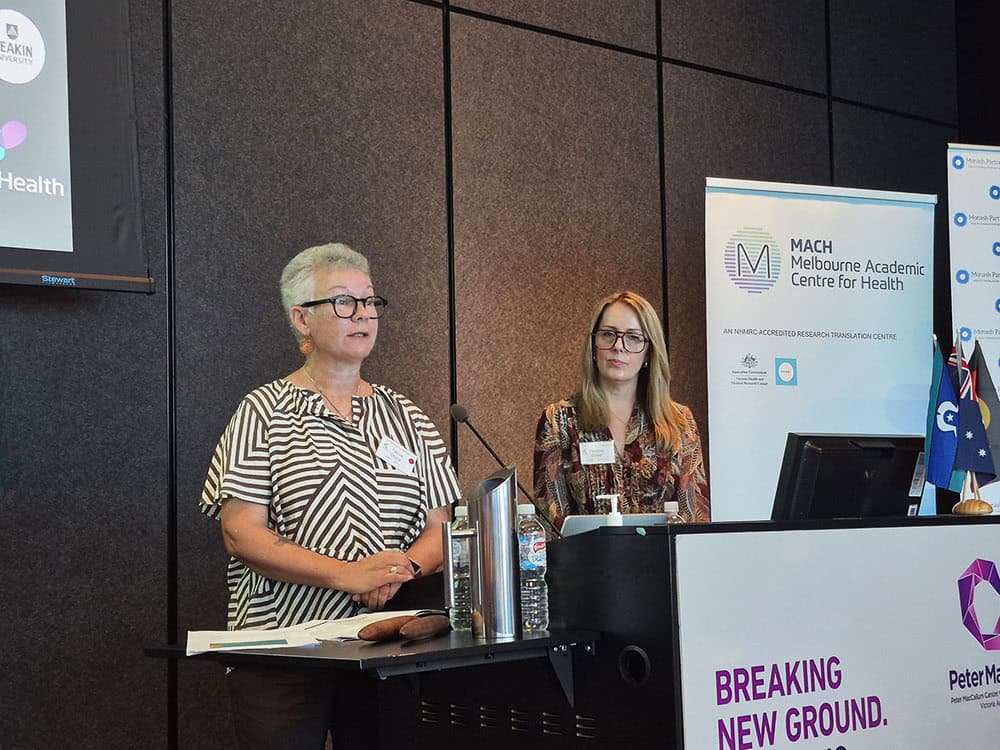
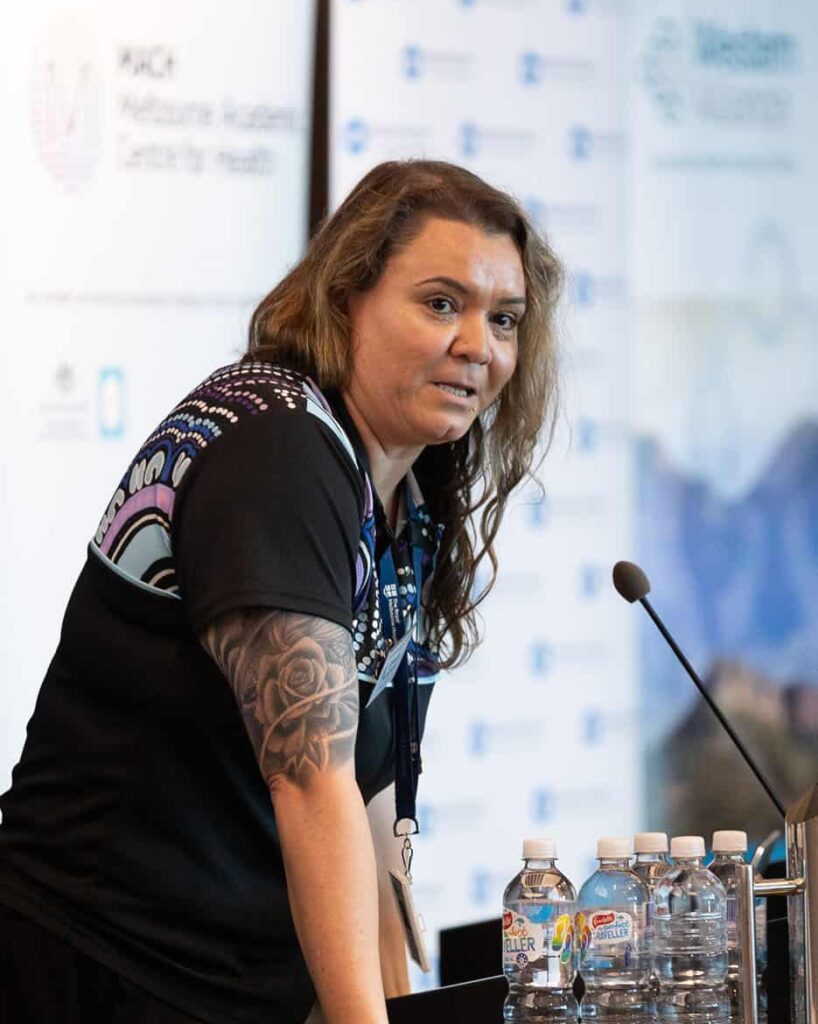
Keynote speaker Professor Karen Adams, Director of the Gukwonderuk Indigenous Health Workforces Centre at Monash University, reflected on a sector in transition, as the research community continues to navigate how to work ethically and effectively together.
She highlighted common challenges in how Indigenous researchers are approached, including email requests that use deficit-based language, predefine research questions without community input or seek input too late in the process.
These examples point to broader issues around power, authorship and embedding Indigenous perspectives across all stages of research.
“As a research community, we are still trying to work out how we can garner medical, health and wellbeing research to grow benefit and equity with Aboriginal and Torres Strait Islander peoples. Truth-telling will help,” Professor Adams said.
Professor Adams emphasised these examples were about encouraging reflection and stronger collaboration.
“I want to make clear the purpose for me showing these emails [mock-ups], is not to make people feel bad but rather raise awareness, discussion, thought and even debate about how people work together in this space.”
She also pointed to marra nngarrgoo, marra goorri, developed by VACCHO, as a framework to support ethical, community-led research practice.
Getting through the door of health services
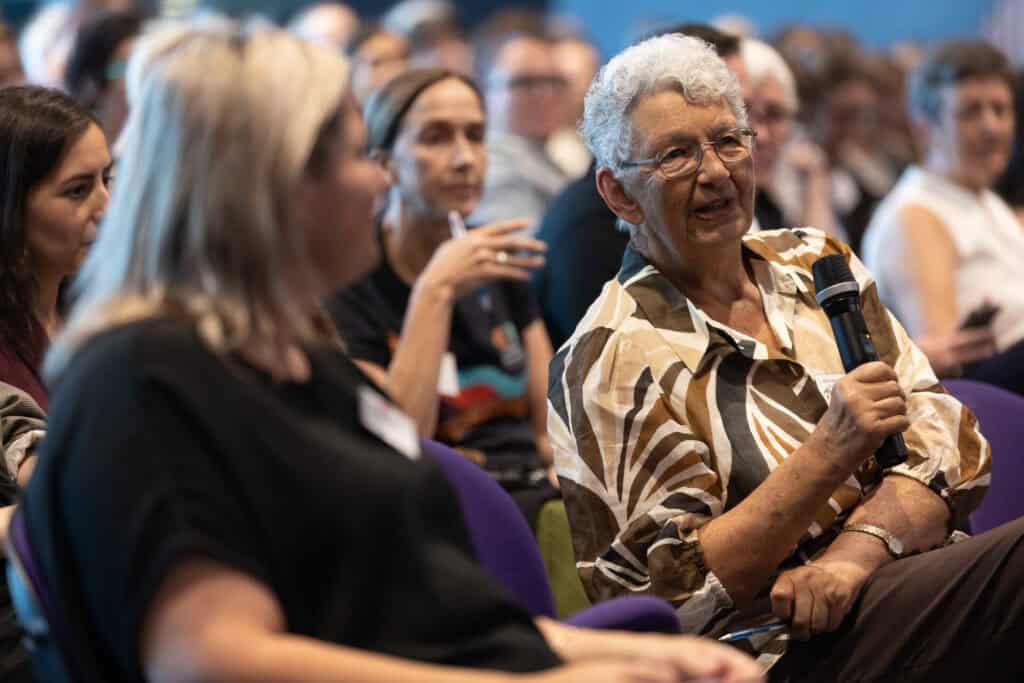
Across MACH, Monash Partners and Western Alliance, a consistent message emerged: people must be able to “get through the door” to access care.
Aboriginal and Torres Strait Islander people can face barriers such as transport costs, caring responsibilities, mobility limitations and past experiences of trauma or cultural unsafety – and may leave before receiving care due to long wait times or unwelcoming environments.
Across the state, health services researchers are working to address these barriers.
At St Vincent’s Hospital, Dr Rachel Goh, Nicole Watt (now at Western Health) and Dr Iulia Ioan-Balota are improving emergency department processes so patients are identified early, seen more quickly and welcomed into culturally safe environments – helping to rebuild trust and ensuring people receive the care they came for.
At Northern Health, Andrew Morrison and Casey Kiss are extending this work into virtual care by designing culturally safe digital emergency department experiences that better reflect community needs.
At Bayside Health – Peninsula Care Group, in partnership with First Peoples’ Health and Wellbeing, Kunal Mahajan, Briony Lamprecht and Sharyn Margheriti are strengthening early identification, prevention and management of diabetes through the Aboriginal Health Innovation (AHII) Diabetes Program.
Designed and led by First Nations communities, the program embeds cultural safety, improves engagement and follow-up, and supports community-driven pathways that build trust, continuity of care and self-determination.
At Grampians Health, Jessica Payne and Karina Demasson are working to improve culturally safe emergency care pathways in regional settings. This work addresses the additional barriers faced outside metropolitan health services, helping to improve access and create more welcoming, culturally safe environments for Aboriginal and Torres Strait Islander patients.
Guiding a little boat in a rocky river
Across the Showcase, multiple initiatives focused on improving continuity and navigation of care – with navigating cancer care described as steering “a little boat through a rocky, winding river”.
An initiative led by VACCHO in collaboration with Peter Mac researchers has introduced Aboriginal Cancer Care Coordinators across Victoria.
Led by Tanya Druce, Mollie Wilson and their team, the program supports patients and families to access services, attend appointments, organise transport and navigate care in a culturally safe way.
Showcasing impact
The MACH Aboriginal Health Showcase demonstrated the transformative potential of Indigenous-led research across MACH, Monash Partners and Western Alliance.
When Aboriginal and Torres Strait Islander peoples lead research, health systems become more responsive, culturally safe and effective.
Next Showcase
Co-Chair of the Aboriginal Leadership Group, Uncle Graham Atkinson, acknowledged and thanked the ALG Showcase Organising Committee, MACH secretariat staff, guest speakers and panel participants for their contribution to a highly successful event.
The Showcase received strong feedback from attendees, highlighting the impact of the presentations and the value of the discussions in deepening understanding of Aboriginal health issues.
Planning is already underway for the next Aboriginal Health Showcase in March 2027, building on this year’s success and continuing to foster connection, dialogue and community-led impact.
Explore the full program and featured initiatives