

The well-attended event, held both online and at the Peter MacCallum Cancer Centre, brought together healthcare leaders, clinicians, researchers and representatives from across the MACH network and beyond to highlight Indigenous-led programs and initiatives addressing Aboriginal and Torres Strait Islander Community health priorities through research and in health services and hospitals.
The day began with a Welcome to Country by Uncle Perry Wandin, followed by a powerful keynote address from Victorian Aboriginal Community Controlled Health Organisation (VACCHO) CEO Dr Jill Gallagher AO.
Dr Gallagher drew attention to the rich Indigenous knowledge traditions of reading and caring for Country and human health and the impact of colonisation – sharing her own experience of witnessing the reburying of 30 Ancestral Indigenous remains in Kings Domain on 22 November 1985 through her role with Museum Victoria.
She emphasised the importance of Truth-Telling, while also pointing to how Aboriginal Community Controlled Organisations have been leading the way in providing holistic and culturally safe care to Community.
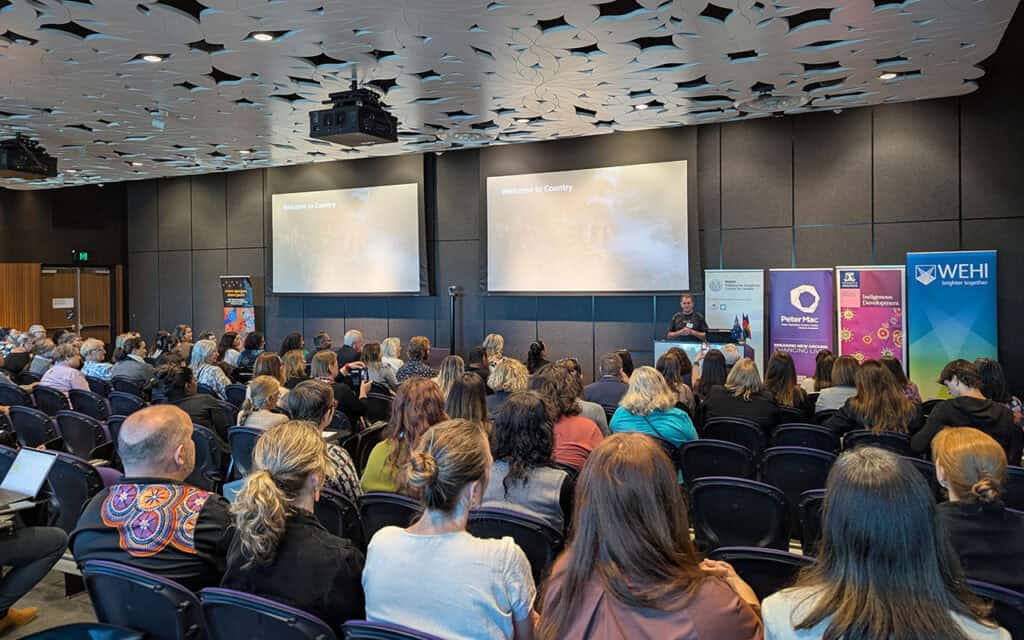
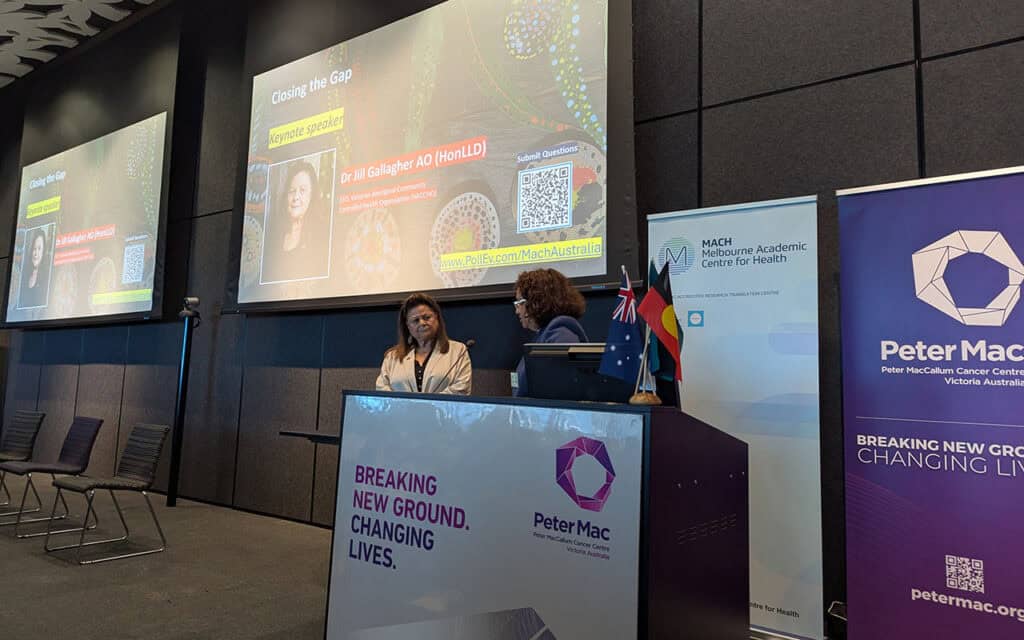
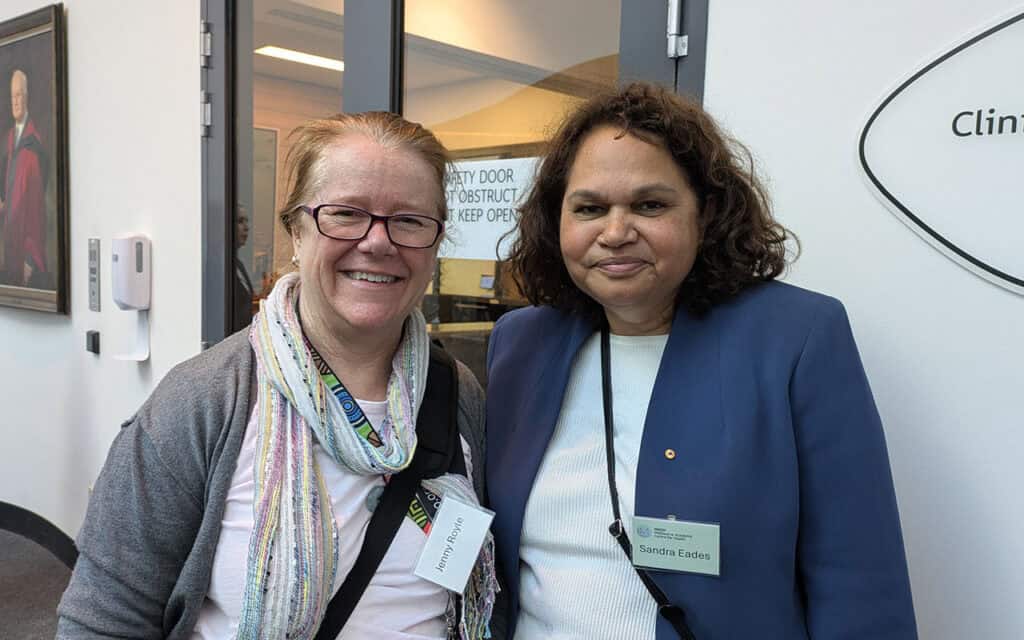
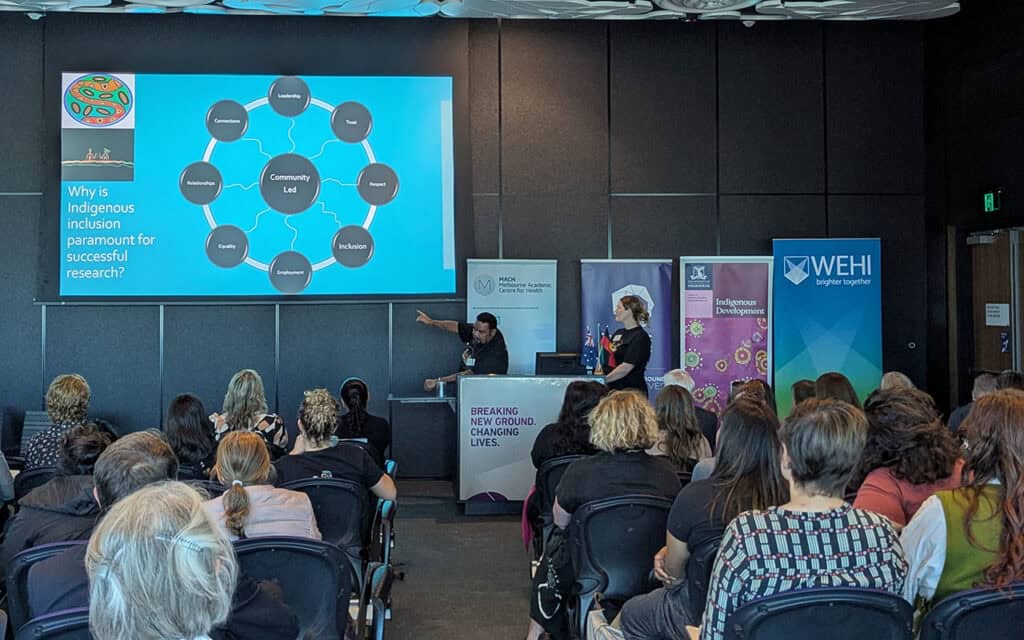
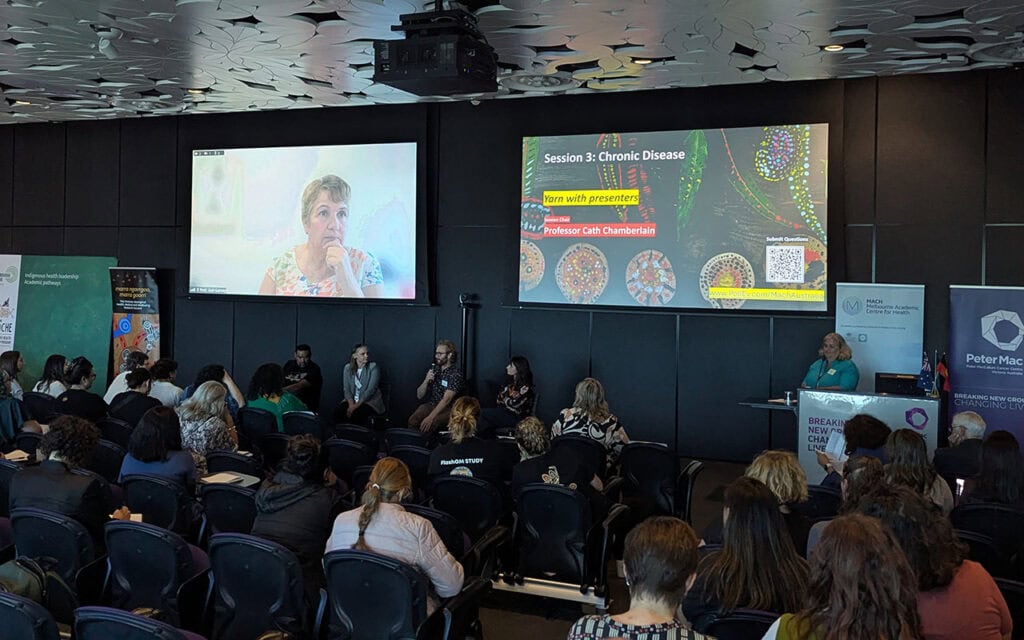
The Showcase program was divided into three distinct sessions: Closing the Gap, Co-Design and Partnering with Community, and Chronic Disease. Each session offered a diverse range of presentations from health organisation representatives – highlighting the innovative programs and initiatives addressing key Aboriginal health priorities.
These presentations were followed by yarns – panel sessions featuring engaging discussion among the presenters – creating an open environment for sharing diverse perspectives and experiences.
ALG Co-chair Uncle Graham Atkinson says participants engaged in meaningful dialogue, learning from research advancements, practical experiences and Community-led initiatives focussed on closing the gap in health disparities.
“By sharing knowledge and celebrating existing impactful work, the Showcase is building a foundation for future collaboration and a more unified approach toward achieving health equity for Aboriginal and Torres Strait Islander peoples.”
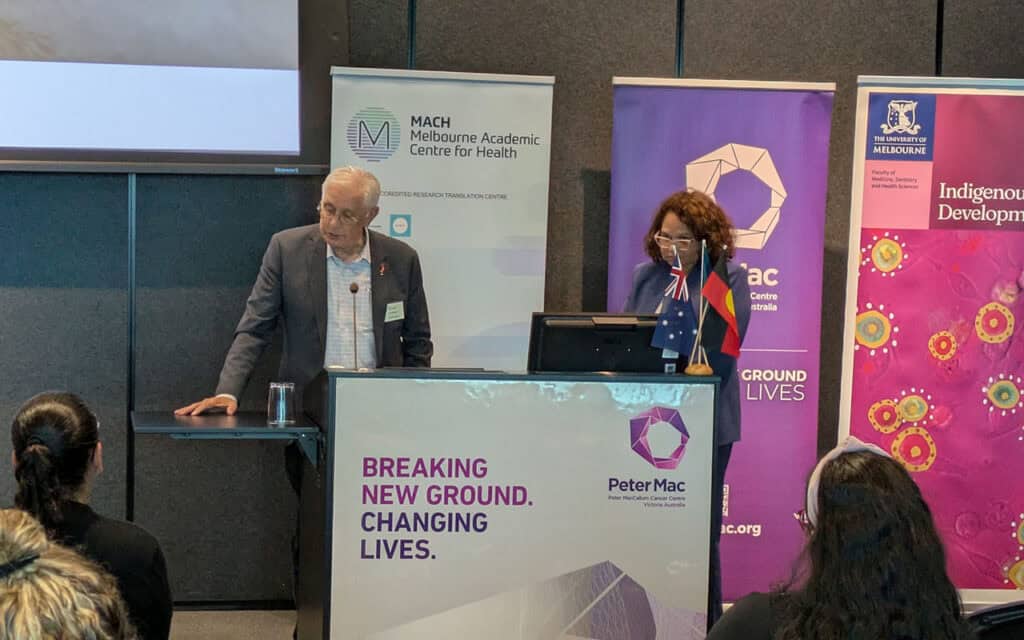
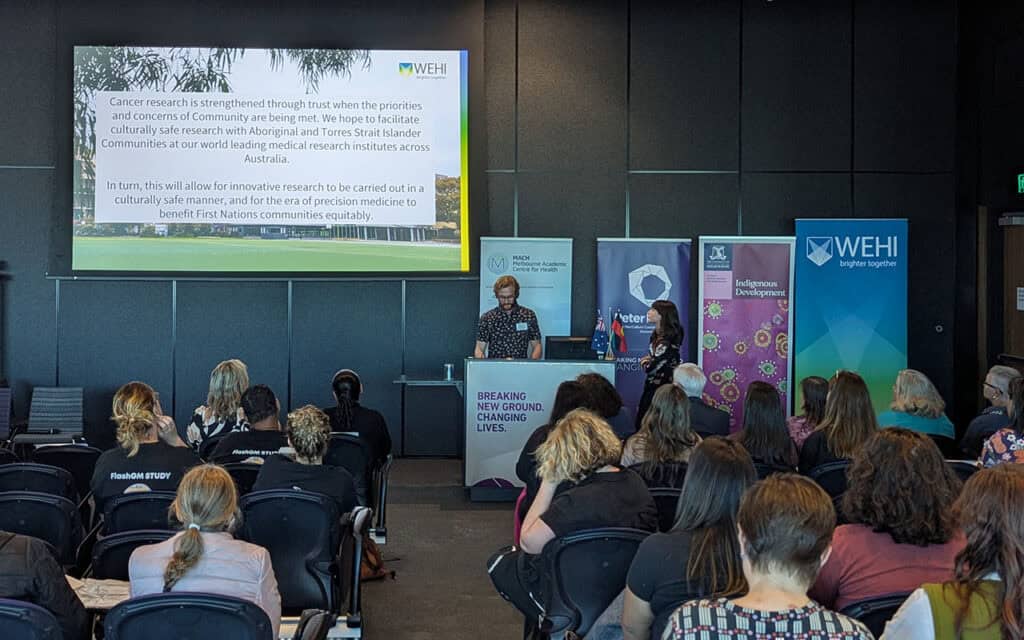
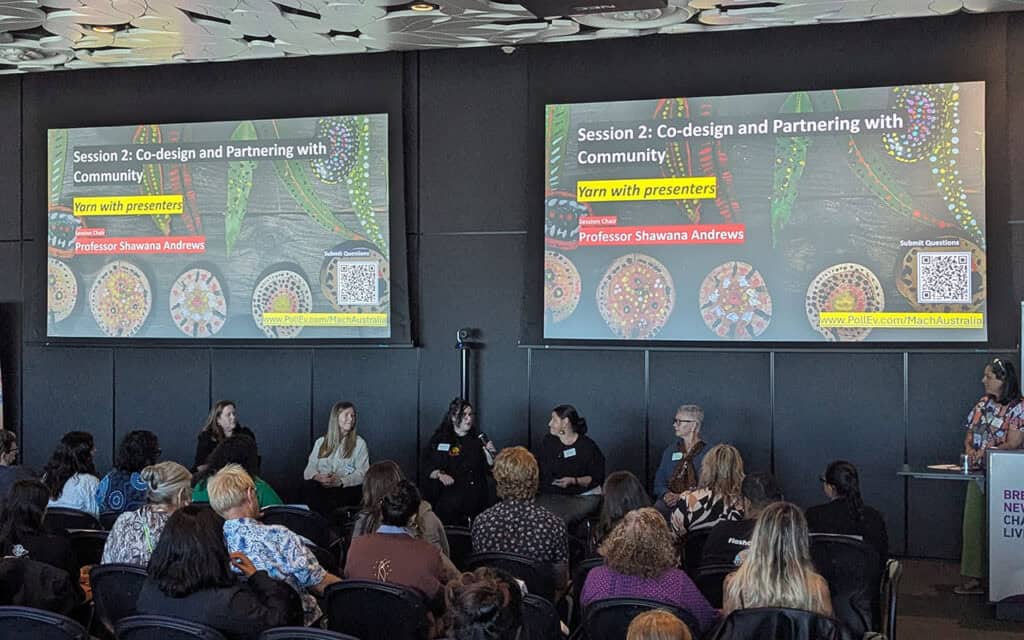
Uncle Graham described the Showcase as a vital platform for amplifying the voices and expertise of Aboriginal and Torres Strait Islander health representatives: “It has highlighted the sector’s commitment to implementing culturally safe and effective research programs guided by Community.”
The ALG extends their gratitude to everyone who shared their research findings, learnings and progress in improving Indigenous health outcomes. Special thanks to Showcase sponsors Peter MacCallum Cancer Centre, WEHI (Walter and Eliza Hall Institute of Medical Research) and The University of Melbourne Faculty of Medicine, Dentistry and Health Sciences (MDHS) – and representatives from Austin Health, Faculty of MDHS, North Eastern Public Health Unit (NEPHU), Peter MacCallum Cancer Centre, The Royal Melbourne Hospital, St Vincent’s Hospital Melbourne, The University of Queensland and Western Health.
Explore the initiatives and resources presented at this year’s showcase
- VACCHO released the Victorian Aboriginal Health and Medical Research Accord in October 2023. Submit an expression of interest to join the VACCHO human research ethics committee.
- The Royal Melbourne Hospital co-designed and rolled out cultural safety training for administrative and nursing staff in 2022, opened the Aboriginal Health Unit in 2023, revised and updated the Aboriginal health needs, workforce and Reconciliation Action plans and employed First Nations nurses and a clinical ethicist to work with the Aboriginal Liaison team to translate clinical information and help mitigate issues of racism and cultural safety.
- St. Vincent’s Hospital has worked to improve the experiences of First Nations people in their Emergency Department, create a culturally safe space and reduce ED wait times by using visual identifiers to recognise First Nations staff and prioritise Aboriginal and Torres Strait Islander patients.
- As part of Western Health’s Galinjera Maternity Program, a deck of discussion cards was co-designed to prompt culturally safe conversations with parents during pregnancy, birth and in caring for their baby.
- Read about the North Eastern Public Health Unit (NEPHU) program ‘Tidda’s Gatherings’ at the Margaret Tucker Hostel – a Community-led crisis accommodation, which used a trauma-informed, culturally safe approach, to facilitate conversations on medical topics with women who had experienced violence.
- Learn about the project Improving understandings of and responses to alcohol-related family violence for Aboriginal people partnering with remote communities across Australia.
- Cancer researchers, Dr Rachel Joyce and Dr Connor McGuiness are seeking Community perspectives through yarning circles to inform on culturally safe national guidelines for biobanking in cancer and biomedical research.
- Watch the film on flash glucose monitoring that arose from The University of Melbourne Flash GM Study, with artworks by Bernard Kelly-Edwards.
- The Ngarra Jarra Aboriginal Health Unit at Austin Health provides the opportunity for registrars to be immersed and experience Indigenous culture.
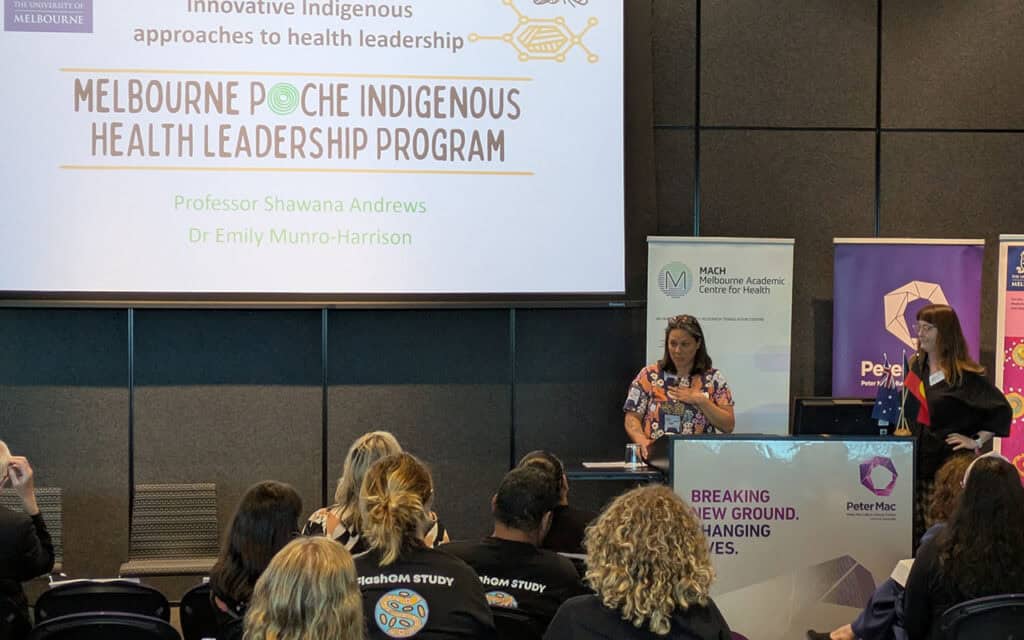
- Learn about the Melbourne Poche Centre Indigenous Leadership program for emerging Aboriginal health leaders.